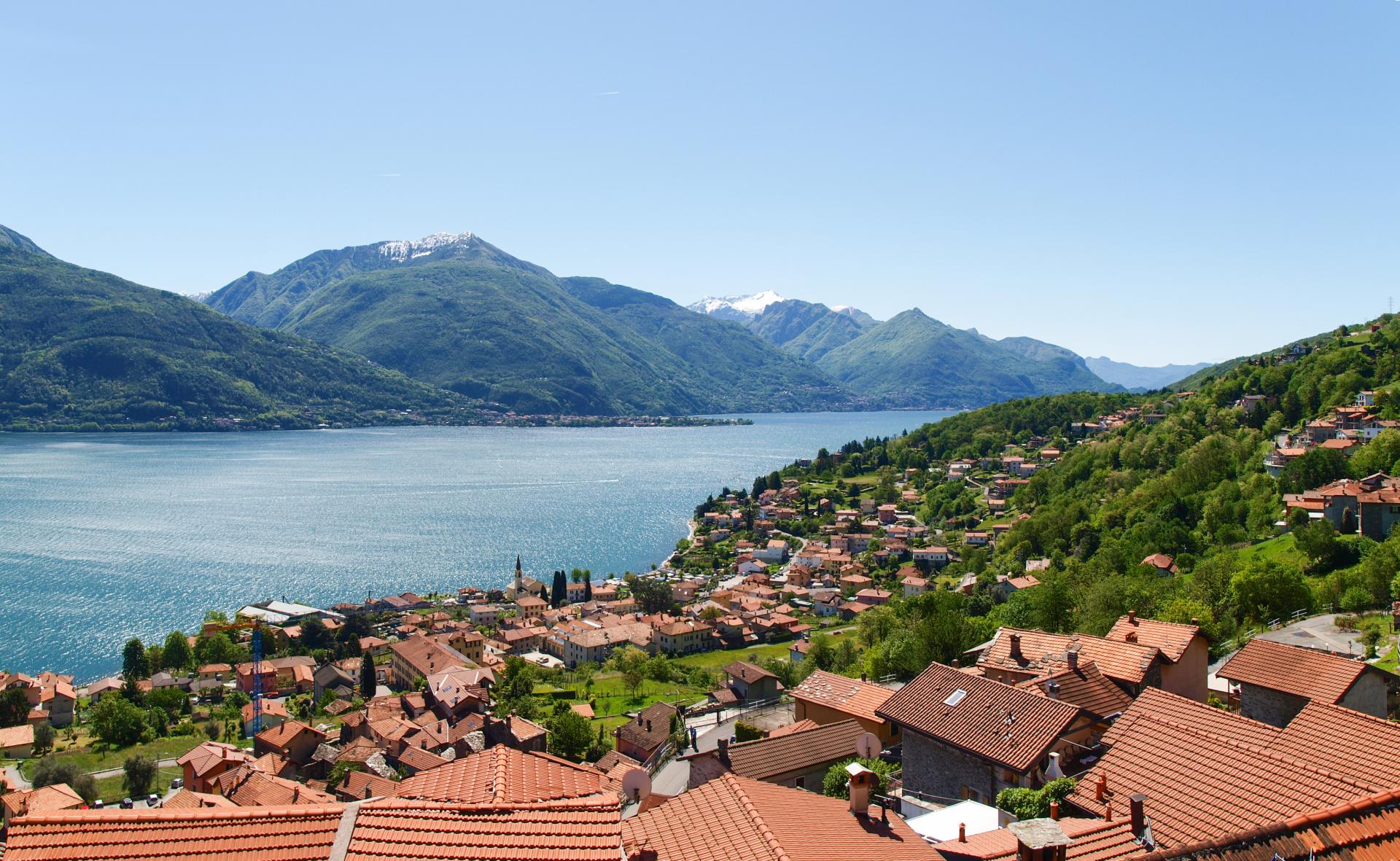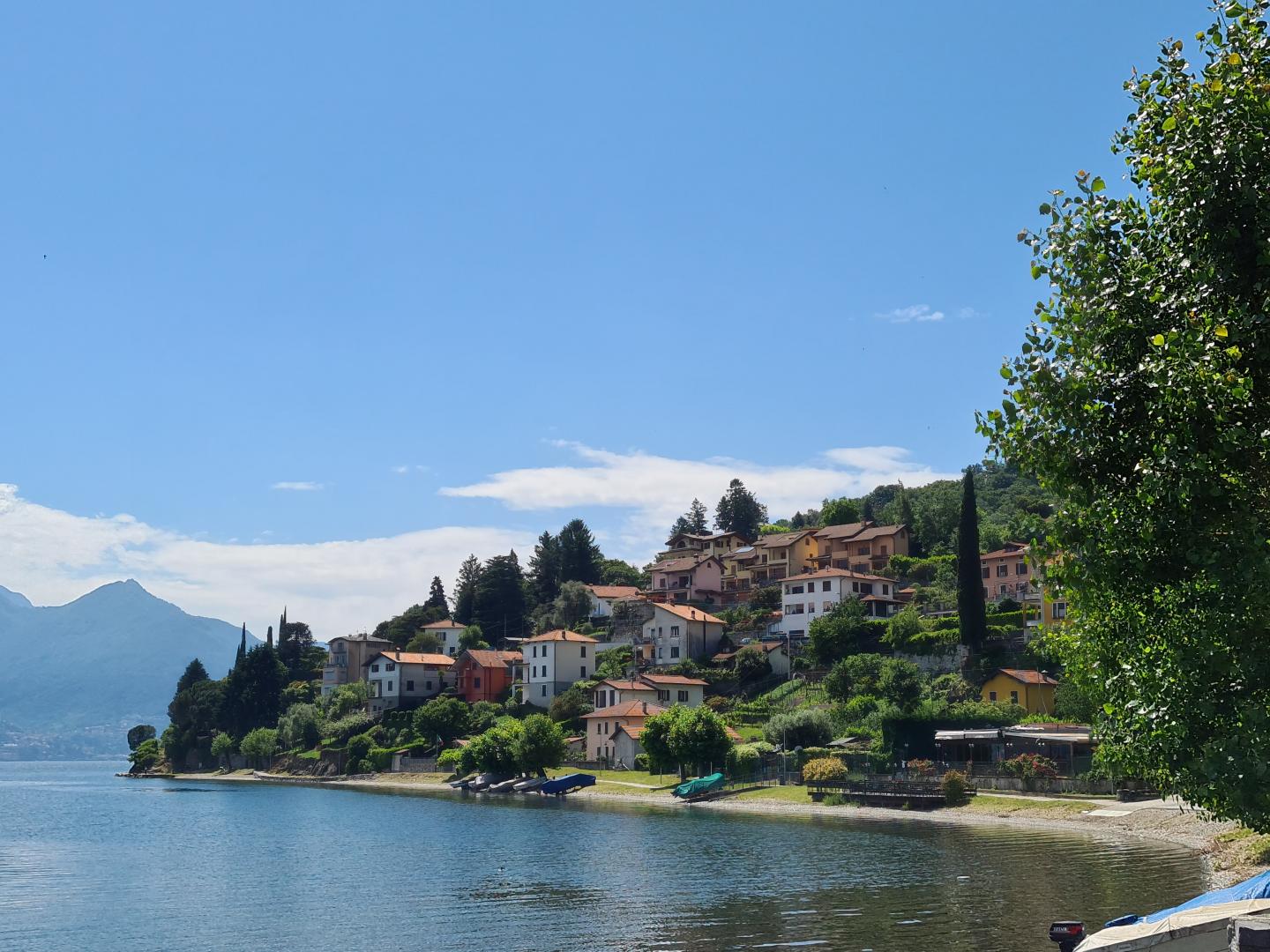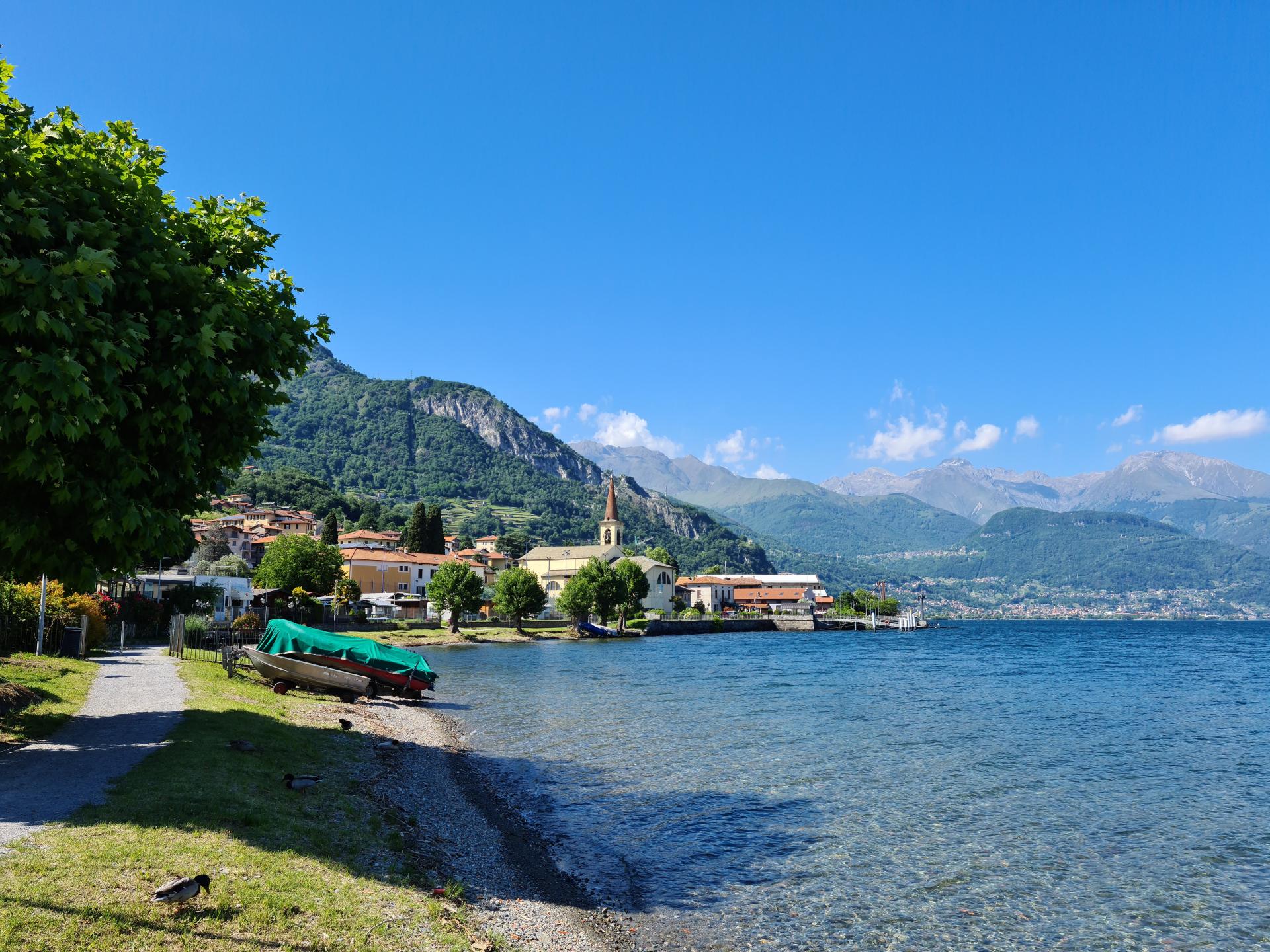
Located between Musso and Cremia, Pianello del Lario is made up of several hamlets scattered between the slopes of Mount Bregagno and the shores of Lake Como. Some of these hamlets, whose names trace back to ancient Roman fondi (estates), still preserve small clusters of historic houses with valuable frescoes on the walls.
In the early 11th century, Pianello was part of a royal curtis belonging to the Benedictine Abbey of San Carpoforo in Como. Known at the time as the Corte di Musso, the territory of Pianello was administratively united with that of Musso. The centre of this medieval court stood around what is now the Church of San Martino. The area once included the abbey, a castle with walls and a moat, homes for the local peasants and the church itself, complete with a small cemetery. The parish of Pianello was officially established in 1472, following nearly a century of bitter disputes that eventually led to both civil and ecclesiastical separation from Musso.
From the late 18th century to the mid-20th century, Pianello's history was closely tied to silk production, a thriving industry that developed on Lake Como. Most of the local population grew vines and mulberry trees to feed silkworms and found work in the many spinning mills that sprang up along the Val Grande stream. Today, agriculture in Pianello del Lario is mostly limited to small-scale, family use. The village has evolved into a charming lakeside resort, ideal for those seeking relaxation and a love of outdoor activities such as sailing, hiking and cycling. One of the highlights is the scenic Breva e Tivan lakeside walk, which stretches from the hamlet of Crotti—named after the ancient crotti (dry-stone cellars) mentioned in historical records—all the way to Musso.
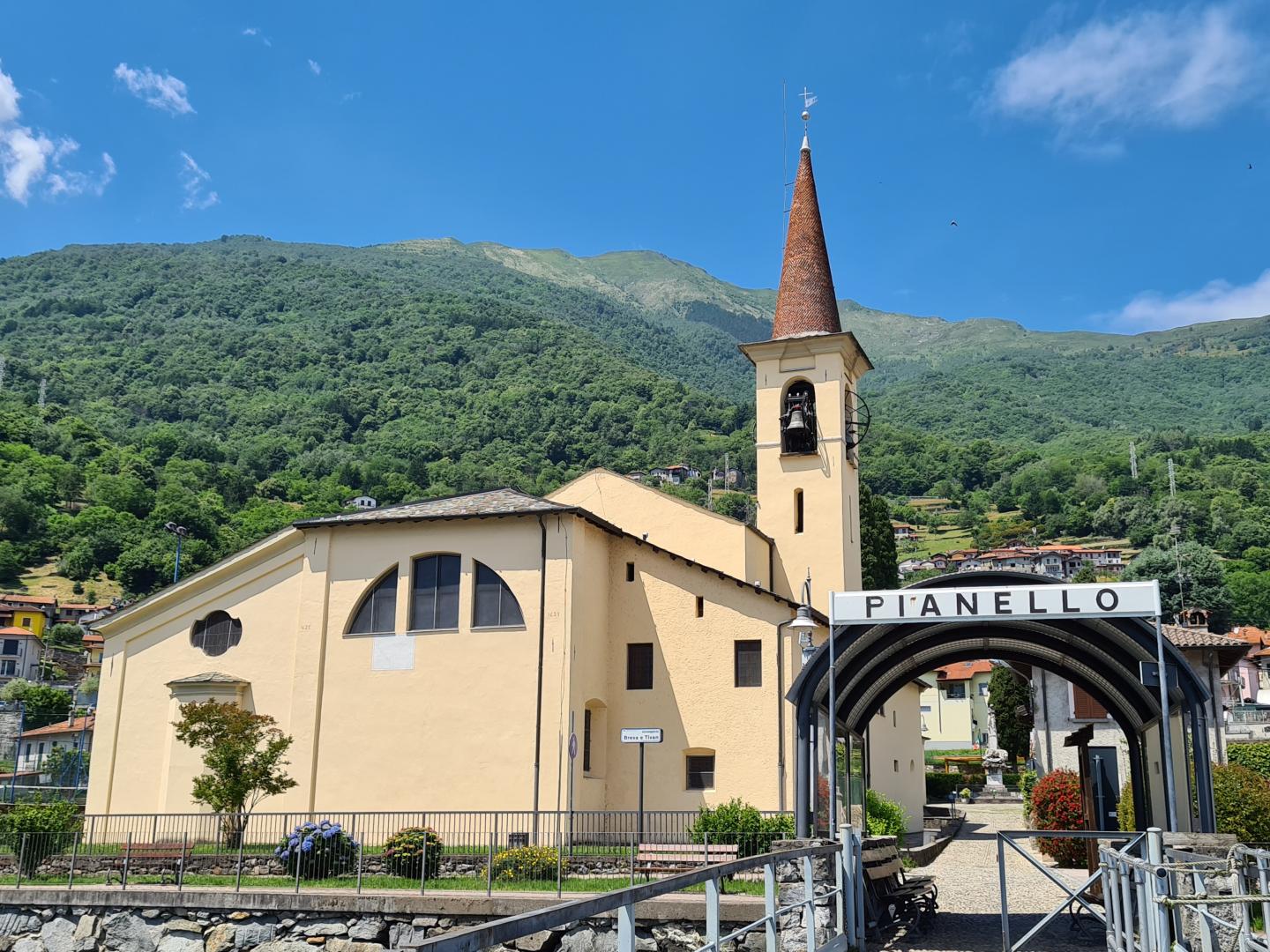
Of particular historical and artistic interest is the Church of San Martino, once the centrepiece of the medieval court and extensively remodelled in the 16th century. Inside, visitors can admire a series of remarkable frescoes by Isidoro Bianchi da Campione and Gian Battista Annoni, as well as a precious processional cross crafted by Francesco Ser Gregori, a renowned goldsmith from Gravedona.
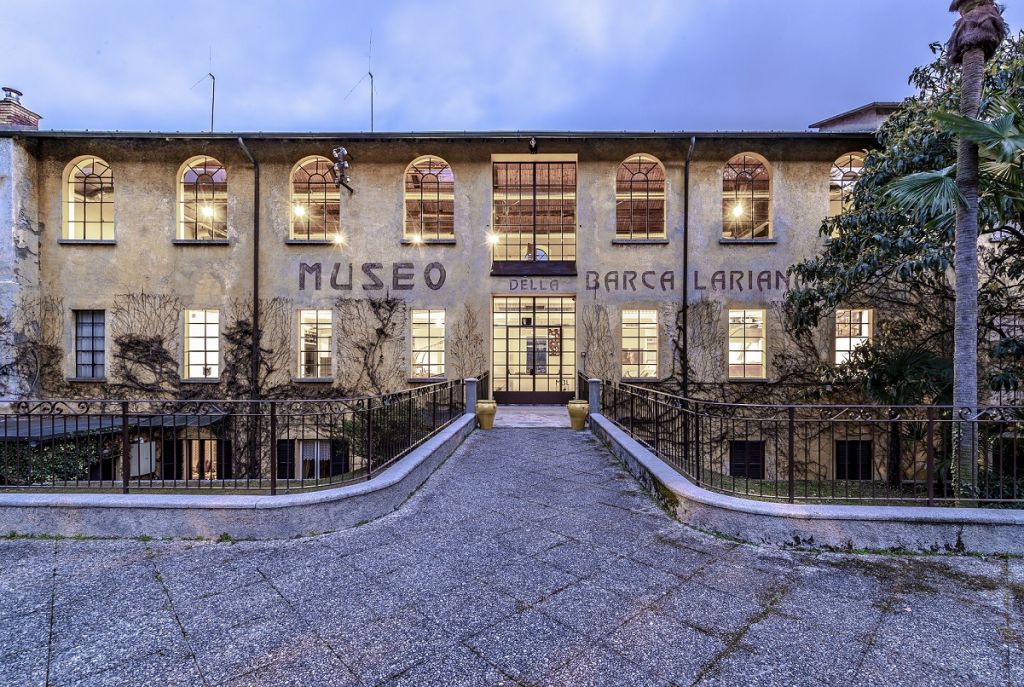
Pianello del Lario is also home to the Museo Barca Lariana, a unique museum dedicated to the history of boating and navigation in Italy. Founded in 1982 and housed in a former 19th-century spinning mill, the museum holds a remarkable collection of around 450 boats and numerous nautical artefacts. This exceptional heritage tells the story of Italy's maritime traditions.
The village also holds a special place in the life of Don Luigi Guanella, the founder of a global network of institutions dedicated to caring for the elderly and abandoned children. A deeply compassionate priest and later canonised saint, Don Guanella served as parish priest in Pianello del Lario from 1881 to 1890. It was here that he began his life's mission, first managing a small hospice in the hamlet of Camlago and later establishing a larger facility in Calozzo, the Casa Sacro Cuore, which is still open and operating today.